•  
CHINA-BEIJING-CENTRAL AXIS-LISTED UNESCO WORLD HERITAGE (CN)

CHINA-BEIJING-CENTRAL AXIS-LISTED UNESCO WORLD HERITAGE (CN)

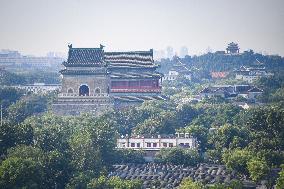
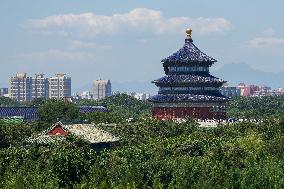
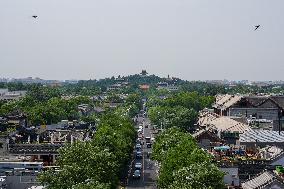
(240727) -- BEIJING, July 27, 2024 Photo by Xinhua/ABACAPRESS.COM) -- This photo taken on July 20, 2024 shows the Bell and Drum Towers and the Jingshan Hill(R rear) in Beijing, capital of China. The United Nations Educational, Scientific and Cultural Organization (UNESCO) on Saturday announced the inclusion of the Beijing Central Axis: A Building Ensemble Exhibiting the Ideal Order of the Chinese Capital, into its world heritage list. So far, China has a total of 59 World Heritage Sites. Beijing Central Axis, initially established in the 13th century and formed in the 16th century, runs through the old city of Beijing from north to south. It has become the longest urban axis in the world today, spanning 7.8 kilometers. The heritage area of the Beijing Central Axis covers 589 hectares, with a buffer zone of 4,542 hectares. Its location, layout, urban form, and design reflect the ancient Chinese tradition of urban planning, serving as an important emblem that highlights the distinctive characteristics of Chines

  •  
CHINA-BEIJING-CENTRAL AXIS-LISTED UNESCO WORLD HERITAGE (CN)

CHINA-BEIJING-CENTRAL AXIS-LISTED UNESCO WORLD HERITAGE (CN)

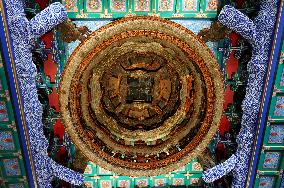
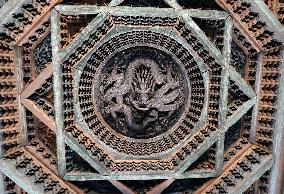
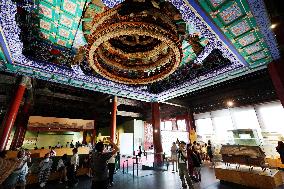
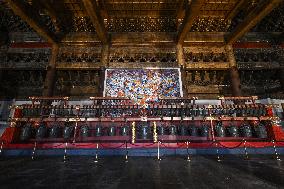
(240727) -- BEIJING, July 27, 2024 Photo by Xinhua/ABACAPRESS.COM) -- This photo taken on July 17, 2024 shows a caisson ceiling of the Longfu Temple displayed in Taisui hall of the Altar of the God of Agriculture in Beijing, capital of China. The United Nations Educational, Scientific and Cultural Organization (UNESCO) on Saturday announced the inclusion of the Beijing Central Axis: A Building Ensemble Exhibiting the Ideal Order of the Chinese Capital, into its world heritage list. So far, China has a total of 59 World Heritage Sites. Beijing Central Axis, initially established in the 13th century and formed in the 16th century, runs through the old city of Beijing from north to south. It has become the longest urban axis in the world today, spanning 7.8 kilometers. The heritage area of the Beijing Central Axis covers 589 hectares, with a buffer zone of 4,542 hectares. Its location, layout, urban form, and design reflect the ancient Chinese tradition of urban planning, serving as an important emblem that high

  •  
CHINA-BEIJING-CENTRAL AXIS-LISTED UNESCO WORLD HERITAGE (CN)

CHINA-BEIJING-CENTRAL AXIS-LISTED UNESCO WORLD HERITAGE (CN)

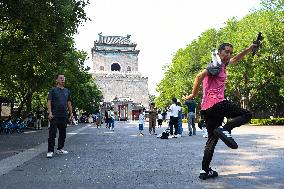
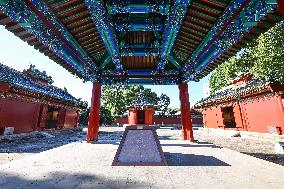
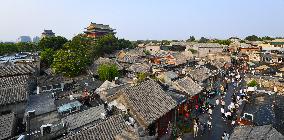
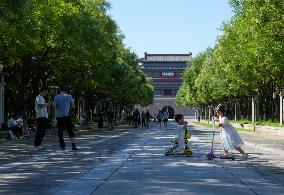
(240727) -- BEIJING, July 27, 2024 Photo by Xinhua/ABACAPRESS.COM) -- A citizen kicks shuttlecock at a square in front of the Bell and Drum Towers in Beijing, capital of China, July 3, 2024. The United Nations Educational, Scientific and Cultural Organization (UNESCO) on Saturday announced the inclusion of the Beijing Central Axis: A Building Ensemble Exhibiting the Ideal Order of the Chinese Capital, into its world heritage list. So far, China has a total of 59 World Heritage Sites. Beijing Central Axis, initially established in the 13th century and formed in the 16th century, runs through the old city of Beijing from north to south. It has become the longest urban axis in the world today, spanning 7.8 kilometers. The heritage area of the Beijing Central Axis covers 589 hectares, with a buffer zone of 4,542 hectares. Its location, layout, urban form, and design reflect the ancient Chinese tradition of urban planning, serving as an important emblem that highlights the distinctive characteristics of Chinese ci

  •  
CHINA-BEIJING-CENTRAL AXIS-LISTED UNESCO WORLD HERITAGE (CN)

CHINA-BEIJING-CENTRAL AXIS-LISTED UNESCO WORLD HERITAGE (CN)

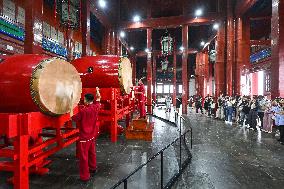
(240727) -- BEIJING, July 27, 2024 Photo by Xinhua/ABACAPRESS.COM) -- Tourists watch a drum performance at the Drum Tower in Beijing, capital of China, July 16, 2024. The United Nations Educational, Scientific and Cultural Organization (UNESCO) on Saturday announced the inclusion of the Beijing Central Axis: A Building Ensemble Exhibiting the Ideal Order of the Chinese Capital, into its world heritage list. So far, China has a total of 59 World Heritage Sites. Beijing Central Axis, initially established in the 13th century and formed in the 16th century, runs through the old city of Beijing from north to south. It has become the longest urban axis in the world today, spanning 7.8 kilometers. The heritage area of the Beijing Central Axis covers 589 hectares, with a buffer zone of 4,542 hectares. Its location, layout, urban form, and design reflect the ancient Chinese tradition of urban planning, serving as an important emblem that highlights the distinctive characteristics of Chinese civilization. Photo by Xin

  •  
CHINA-BEIJING-CENTRAL AXIS-LISTED UNESCO WORLD HERITAGE (CN)

CHINA-BEIJING-CENTRAL AXIS-LISTED UNESCO WORLD HERITAGE (CN)

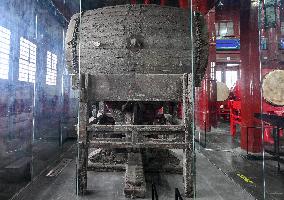
(240727) -- BEIJING, July 27, 2024 Photo by Xinhua/ABACAPRESS.COM) -- An ancient drum is pictured in the Drum Tower in Beijing, capital of China, July 16, 2024. The United Nations Educational, Scientific and Cultural Organization (UNESCO) on Saturday announced the inclusion of the Beijing Central Axis: A Building Ensemble Exhibiting the Ideal Order of the Chinese Capital, into its world heritage list. So far, China has a total of 59 World Heritage Sites. Beijing Central Axis, initially established in the 13th century and formed in the 16th century, runs through the old city of Beijing from north to south. It has become the longest urban axis in the world today, spanning 7.8 kilometers. The heritage area of the Beijing Central Axis covers 589 hectares, with a buffer zone of 4,542 hectares. Its location, layout, urban form, and design reflect the ancient Chinese tradition of urban planning, serving as an important emblem that highlights the distinctive characteristics of Chinese civilization. Photo by Xinhua/AB

  •  
CHINA-BEIJING-CENTRAL AXIS-LISTED UNESCO WORLD HERITAGE (CN)

CHINA-BEIJING-CENTRAL AXIS-LISTED UNESCO WORLD HERITAGE (CN)

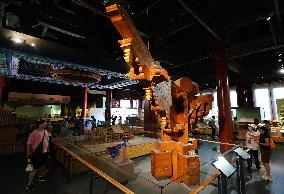
(240727) -- BEIJING, July 27, 2024 Photo by Xinhua/ABACAPRESS.COM) -- People view models of the Bell and Drum Towers inside the Drum Tower in Beijing, capital of China, July 16, 2024. The United Nations Educational, Scientific and Cultural Organization (UNESCO) on Saturday announced the inclusion of the Beijing Central Axis: A Building Ensemble Exhibiting the Ideal Order of the Chinese Capital, into its world heritage list. So far, China has a total of 59 World Heritage Sites. Beijing Central Axis, initially established in the 13th century and formed in the 16th century, runs through the old city of Beijing from north to south. It has become the longest urban axis in the world today, spanning 7.8 kilometers. The heritage area of the Beijing Central Axis covers 589 hectares, with a buffer zone of 4,542 hectares. Its location, layout, urban form, and design reflect the ancient Chinese tradition of urban planning, serving as an important emblem that highlights the distinctive characteristics of Chinese civilizat

  •  
CHINA-BEIJING-CENTRAL AXIS-LISTED UNESCO WORLD HERITAGE (CN)

CHINA-BEIJING-CENTRAL AXIS-LISTED UNESCO WORLD HERITAGE (CN)

(240727) -- BEIJING, July 27, 2024 Photo by Xinhua/ABACAPRESS.COM) -- This photo taken on July 17, 2024 shows a view in the Altar of the God of Agriculture in Beijing, capital of China. The United Nations Educational, Scientific and Cultural Organization (UNESCO) on Saturday announced the inclusion of the Beijing Central Axis: A Building Ensemble Exhibiting the Ideal Order of the Chinese Capital, into its world heritage list. So far, China has a total of 59 World Heritage Sites. Beijing Central Axis, initially established in the 13th century and formed in the 16th century, runs through the old city of Beijing from north to south. It has become the longest urban axis in the world today, spanning 7.8 kilometers. The heritage area of the Beijing Central Axis covers 589 hectares, with a buffer zone of 4,542 hectares. Its location, layout, urban form, and design reflect the ancient Chinese tradition of urban planning, serving as an important emblem that highlights the distinctive characteristics of Chinese civiliz

  •  
CHINA-BEIJING-CENTRAL AXIS-LISTED UNESCO WORLD HERITAGE (CN)

CHINA-BEIJING-CENTRAL AXIS-LISTED UNESCO WORLD HERITAGE (CN)

(240727) -- BEIJING, July 27, 2024 Photo by Xinhua/ABACAPRESS.COM) -- This photo taken on July 17, 2024 shows a caisson ceiling of the Longfu Temple displayed in the worship hall of the Altar of the God of Agriculture in Beijing, capital of China. The United Nations Educational, Scientific and Cultural Organization (UNESCO) on Saturday announced the inclusion of the Beijing Central Axis: A Building Ensemble Exhibiting the Ideal Order of the Chinese Capital, into its world heritage list. So far, China has a total of 59 World Heritage Sites. Beijing Central Axis, initially established in the 13th century and formed in the 16th century, runs through the old city of Beijing from north to south. It has become the longest urban axis in the world today, spanning 7.8 kilometers. The heritage area of the Beijing Central Axis covers 589 hectares, with a buffer zone of 4,542 hectares. Its location, layout, urban form, and design reflect the ancient Chinese tradition of urban planning, serving as an important emblem that

  •  
CHINA-BEIJING-CENTRAL AXIS-UNESCO WORLD HERITAGE-CULTURAL RELICS-PROTECTION (CN)

CHINA-BEIJING-CENTRAL AXIS-UNESCO WORLD HERITAGE-CULTURAL RELICS-PROTECTION (CN)

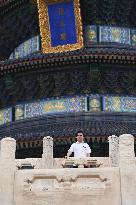
(240727) -- BEIJING, July 27, 2024 Photo by Xinhua/ABACAPRESS.COM) -- Chen Geng is pictured at the Temple of Heaven, a heritage component on the Beijing Central Axis, in Beijing, capital of China, July 19, 2024. Interested in traditional architecture since childhood, Chen Geng works now at the administration of the Temple of Heaven in Beijing, with a major duty of daily check, maintenance and protection of the cultural relics in the temple. The United Nations Educational, Scientific and Cultural Organization (UNESCO) on Saturday announced the inclusion of the Beijing Central Axis: A Building Ensemble Exhibiting the Ideal Order of the Chinese Capital, into its world heritage list. Beijing Central Axis, initially established in the 13th century and formed in the 16th century, runs through the old city of Beijing from north to south. It has become the longest urban axis in the world today, spanning 7.8 kilometers. The heritage area of the Beijing Central Axis covers 589 hectares, with a buffer zone of 4,542 hect

  •  
CHINA-BEIJING-CENTRAL AXIS-UNESCO WORLD HERITAGE-CULTURAL RELICS-PROTECTION (CN)

CHINA-BEIJING-CENTRAL AXIS-UNESCO WORLD HERITAGE-CULTURAL RELICS-PROTECTION (CN)

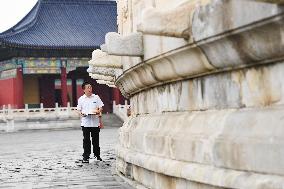
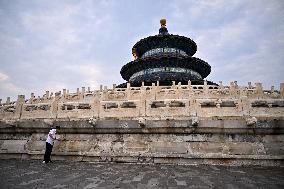
(240727) -- BEIJING, July 27, 2024 Photo by Xinhua/ABACAPRESS.COM) -- Chen Geng conducts daily check at the Temple of Heaven, a heritage component on the Beijing Central Axis, in Beijing, capital of China, July 19, 2024. Interested in traditional architecture since childhood, Chen Geng works now at the administration of the Temple of Heaven in Beijing, with a major duty of daily check, maintenance and protection of the cultural relics in the temple. The United Nations Educational, Scientific and Cultural Organization (UNESCO) on Saturday announced the inclusion of the Beijing Central Axis: A Building Ensemble Exhibiting the Ideal Order of the Chinese Capital, into its world heritage list. Beijing Central Axis, initially established in the 13th century and formed in the 16th century, runs through the old city of Beijing from north to south. It has become the longest urban axis in the world today, spanning 7.8 kilometers. The heritage area of the Beijing Central Axis covers 589 hectares, with a buffer zone of 4

  •  
CHINA-BEIJING-CENTRAL AXIS-UNESCO WORLD HERITAGE-CULTURAL RELICS-PROTECTION (CN)

CHINA-BEIJING-CENTRAL AXIS-UNESCO WORLD HERITAGE-CULTURAL RELICS-PROTECTION (CN)

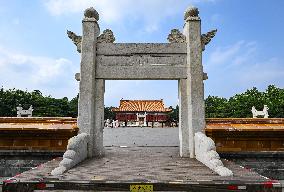
(240727) -- BEIJING, July 27, 2024 Photo by Xinhua/ABACAPRESS.COM) -- Chen Geng (1st, L) checks the humidity of the base of a gate at the Temple of Heaven, a heritage component on the Beijing Central Axis, in Beijing, capital of China, July 19, 2024. Interested in traditional architecture since childhood, Chen Geng works now at the administration of the Temple of Heaven in Beijing, with a major duty of daily check, maintenance and protection of the cultural relics in the temple. The United Nations Educational, Scientific and Cultural Organization (UNESCO) on Saturday announced the inclusion of the Beijing Central Axis: A Building Ensemble Exhibiting the Ideal Order of the Chinese Capital, into its world heritage list. Beijing Central Axis, initially established in the 13th century and formed in the 16th century, runs through the old city of Beijing from north to south. It has become the longest urban axis in the world today, spanning 7.8 kilometers. The heritage area of the Beijing Central Axis covers 589 hec

  •  
CHINA-BEIJING-CENTRAL AXIS-UNESCO WORLD HERITAGE-CULTURAL RELICS-PROTECTION (CN)

CHINA-BEIJING-CENTRAL AXIS-UNESCO WORLD HERITAGE-CULTURAL RELICS-PROTECTION (CN)

(240727) -- BEIJING, July 27, 2024 Photo by Xinhua/ABACAPRESS.COM) -- Chen Geng conducts daily check at the Temple of Heaven, a heritage component on the Beijing Central Axis, in Beijing, capital of China, July 19, 2024. Interested in traditional architecture since childhood, Chen Geng works now at the administration of the Temple of Heaven in Beijing, with a major duty of daily check, maintenance and protection of the cultural relics in the temple. The United Nations Educational, Scientific and Cultural Organization (UNESCO) on Saturday announced the inclusion of the Beijing Central Axis: A Building Ensemble Exhibiting the Ideal Order of the Chinese Capital, into its world heritage list. Beijing Central Axis, initially established in the 13th century and formed in the 16th century, runs through the old city of Beijing from north to south. It has become the longest urban axis in the world today, spanning 7.8 kilometers. The heritage area of the Beijing Central Axis covers 589 hectares, with a buffer zone of 4

  •  
CHINA-BEIJING-CENTRAL AXIS-LISTED UNESCO WORLD HERITAGE (CN)

CHINA-BEIJING-CENTRAL AXIS-LISTED UNESCO WORLD HERITAGE (CN)

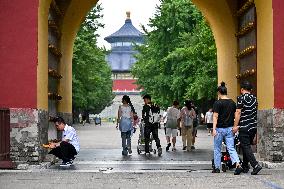
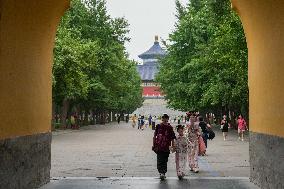
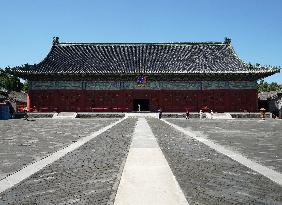
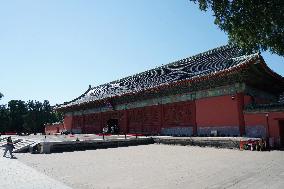
(240727) -- BEIJING, July 27, 2024 Photo by Xinhua/ABACAPRESS.COM) -- Tourists visit the Temple of Heaven in Beijing, capital of China, July 19, 2024. The United Nations Educational, Scientific and Cultural Organization (UNESCO) on Saturday announced the inclusion of the Beijing Central Axis: A Building Ensemble Exhibiting the Ideal Order of the Chinese Capital, into its world heritage list. So far, China has a total of 59 World Heritage Sites. Beijing Central Axis, initially established in the 13th century and formed in the 16th century, runs through the old city of Beijing from north to south. It has become the longest urban axis in the world today, spanning 7.8 kilometers. The heritage area of the Beijing Central Axis covers 589 hectares, with a buffer zone of 4,542 hectares. Its location, layout, urban form, and design reflect the ancient Chinese tradition of urban planning, serving as an important emblem that highlights the distinctive characteristics of Chinese civilization. Photo by Xinhua/ABACAPRESS.C

  •  
CHINA-BEIJING-CENTRAL AXIS-LISTED UNESCO WORLD HERITAGE (CN)

CHINA-BEIJING-CENTRAL AXIS-LISTED UNESCO WORLD HERITAGE (CN)

(240727) -- BEIJING, July 27, 2024 Photo by Xinhua/ABACAPRESS.COM) -- Tourists visit the Temple of Heaven in Beijing, capital of China, June 25, 2024. The United Nations Educational, Scientific and Cultural Organization (UNESCO) on Saturday announced the inclusion of the Beijing Central Axis: A Building Ensemble Exhibiting the Ideal Order of the Chinese Capital, into its world heritage list. So far, China has a total of 59 World Heritage Sites. Beijing Central Axis, initially established in the 13th century and formed in the 16th century, runs through the old city of Beijing from north to south. It has become the longest urban axis in the world today, spanning 7.8 kilometers. The heritage area of the Beijing Central Axis covers 589 hectares, with a buffer zone of 4,542 hectares. Its location, layout, urban form, and design reflect the ancient Chinese tradition of urban planning, serving as an important emblem that highlights the distinctive characteristics of Chinese civilization. Photo by Xinhua/ABACAPRESS.C

  •  
CHINA-BEIJING-CENTRAL AXIS-LISTED UNESCO WORLD HERITAGE (CN)

CHINA-BEIJING-CENTRAL AXIS-LISTED UNESCO WORLD HERITAGE (CN)

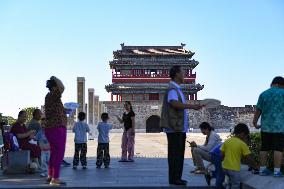
(240727) -- BEIJING, July 27, 2024 Photo by Xinhua/ABACAPRESS.COM) -- This photo taken on July 10, 2024 shows a view of the Bell and Drum Towers in Beijing, capital of China. The United Nations Educational, Scientific and Cultural Organization (UNESCO) on Saturday announced the inclusion of the Beijing Central Axis: A Building Ensemble Exhibiting the Ideal Order of the Chinese Capital, into its world heritage list. So far, China has a total of 59 World Heritage Sites. Beijing Central Axis, initially established in the 13th century and formed in the 16th century, runs through the old city of Beijing from north to south. It has become the longest urban axis in the world today, spanning 7.8 kilometers. The heritage area of the Beijing Central Axis covers 589 hectares, with a buffer zone of 4,542 hectares. Its location, layout, urban form, and design reflect the ancient Chinese tradition of urban planning, serving as an important emblem that highlights the distinctive characteristics of Chinese civilization. Phot

  •  
CHINA-BEIJING-CENTRAL AXIS-LISTED UNESCO WORLD HERITAGE (CN)

CHINA-BEIJING-CENTRAL AXIS-LISTED UNESCO WORLD HERITAGE (CN)

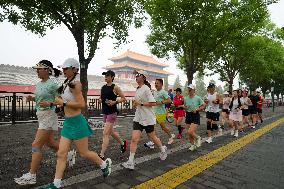
(240727) -- BEIJING, July 27, 2024 Photo by Xinhua/ABACAPRESS.COM) -- Joggers run past the Shenwu Gate of the Forbidden City in Beijing, capital of China, June 22, 2024. The United Nations Educational, Scientific and Cultural Organization (UNESCO) on Saturday announced the inclusion of the Beijing Central Axis: A Building Ensemble Exhibiting the Ideal Order of the Chinese Capital, into its world heritage list. So far, China has a total of 59 World Heritage Sites. Beijing Central Axis, initially established in the 13th century and formed in the 16th century, runs through the old city of Beijing from north to south. It has become the longest urban axis in the world today, spanning 7.8 kilometers. The heritage area of the Beijing Central Axis covers 589 hectares, with a buffer zone of 4,542 hectares. Its location, layout, urban form, and design reflect the ancient Chinese tradition of urban planning, serving as an important emblem that highlights the distinctive characteristics of Chinese civilization. Photo by

  •  
CHINA-BEIJING-CENTRAL AXIS-LISTED UNESCO WORLD HERITAGE (CN)

CHINA-BEIJING-CENTRAL AXIS-LISTED UNESCO WORLD HERITAGE (CN)

(240727) -- BEIJING, July 27, 2024 Photo by Xinhua/ABACAPRESS.COM) -- Tourists visit Taisui hall of the Altar of the God of Agriculture in Beijing, capital of China, July 17, 2024. The United Nations Educational, Scientific and Cultural Organization (UNESCO) on Saturday announced the inclusion of the Beijing Central Axis: A Building Ensemble Exhibiting the Ideal Order of the Chinese Capital, into its world heritage list. So far, China has a total of 59 World Heritage Sites. Beijing Central Axis, initially established in the 13th century and formed in the 16th century, runs through the old city of Beijing from north to south. It has become the longest urban axis in the world today, spanning 7.8 kilometers. The heritage area of the Beijing Central Axis covers 589 hectares, with a buffer zone of 4,542 hectares. Its location, layout, urban form, and design reflect the ancient Chinese tradition of urban planning, serving as an important emblem that highlights the distinctive characteristics of Chinese civilization

  •  
CHINA-BEIJING-CENTRAL AXIS-LISTED UNESCO WORLD HERITAGE (CN)

CHINA-BEIJING-CENTRAL AXIS-LISTED UNESCO WORLD HERITAGE (CN)

(240727) -- BEIJING, July 27, 2024 Photo by Xinhua/ABACAPRESS.COM) -- This photo taken on May 31, 2024 shows a view of the Forbidden City in Beijing, capital of China. The United Nations Educational, Scientific and Cultural Organization (UNESCO) on Saturday announced the inclusion of the Beijing Central Axis: A Building Ensemble Exhibiting the Ideal Order of the Chinese Capital, into its world heritage list. So far, China has a total of 59 World Heritage Sites. Beijing Central Axis, initially established in the 13th century and formed in the 16th century, runs through the old city of Beijing from north to south. It has become the longest urban axis in the world today, spanning 7.8 kilometers. The heritage area of the Beijing Central Axis covers 589 hectares, with a buffer zone of 4,542 hectares. Its location, layout, urban form, and design reflect the ancient Chinese tradition of urban planning, serving as an important emblem that highlights the distinctive characteristics of Chinese civilization. Photo by Xi

  •  
CHINA-BEIJING-CENTRAL AXIS-LISTED UNESCO WORLD HERITAGE (CN)

CHINA-BEIJING-CENTRAL AXIS-LISTED UNESCO WORLD HERITAGE (CN)

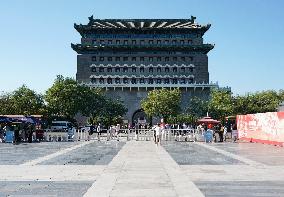
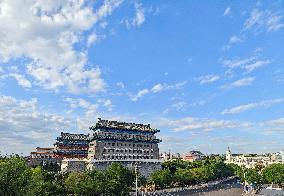
(240727) -- BEIJING, July 27, 2024 Photo by Xinhua/ABACAPRESS.COM) -- This photo taken on July 17, 2024 shows a view of the Zhengyangmen Gate arrow tower in Beijing, capital of China. The United Nations Educational, Scientific and Cultural Organization (UNESCO) on Saturday announced the inclusion of the Beijing Central Axis: A Building Ensemble Exhibiting the Ideal Order of the Chinese Capital, into its world heritage list. So far, China has a total of 59 World Heritage Sites. Beijing Central Axis, initially established in the 13th century and formed in the 16th century, runs through the old city of Beijing from north to south. It has become the longest urban axis in the world today, spanning 7.8 kilometers. The heritage area of the Beijing Central Axis covers 589 hectares, with a buffer zone of 4,542 hectares. Its location, layout, urban form, and design reflect the ancient Chinese tradition of urban planning, serving as an important emblem that highlights the distinctive characteristics of Chinese civilizat

  •  
CHINA-BEIJING-CENTRAL AXIS-LISTED UNESCO WORLD HERITAGE (CN)

CHINA-BEIJING-CENTRAL AXIS-LISTED UNESCO WORLD HERITAGE (CN)

(240727) -- BEIJING, July 27, 2024 Photo by Xinhua/ABACAPRESS.COM) -- This photo taken from Yongdingmen Gate shows a view of the Beijing Central Axis in Beijing, capital of China, on July 18, 2024. The United Nations Educational, Scientific and Cultural Organization (UNESCO) on Saturday announced the inclusion of the Beijing Central Axis: A Building Ensemble Exhibiting the Ideal Order of the Chinese Capital, into its world heritage list. So far, China has a total of 59 World Heritage Sites. Beijing Central Axis, initially established in the 13th century and formed in the 16th century, runs through the old city of Beijing from north to south. It has become the longest urban axis in the world today, spanning 7.8 kilometers. The heritage area of the Beijing Central Axis covers 589 hectares, with a buffer zone of 4,542 hectares. Its location, layout, urban form, and design reflect the ancient Chinese tradition of urban planning, serving as an important emblem that highlights the distinctive characteristics of Chi

  •  
CHINA-BEIJING-CENTRAL AXIS-LISTED UNESCO WORLD HERITAGE (CN)

CHINA-BEIJING-CENTRAL AXIS-LISTED UNESCO WORLD HERITAGE (CN)

(240727) -- BEIJING, July 27, 2024 Photo by Xinhua/ABACAPRESS.COM) -- Citizens enjoy leisure time at Yongdingmen Park in Beijing, capital of China, July 17, 2024. The United Nations Educational, Scientific and Cultural Organization (UNESCO) on Saturday announced the inclusion of the Beijing Central Axis: A Building Ensemble Exhibiting the Ideal Order of the Chinese Capital, into its world heritage list. So far, China has a total of 59 World Heritage Sites. Beijing Central Axis, initially established in the 13th century and formed in the 16th century, runs through the old city of Beijing from north to south. It has become the longest urban axis in the world today, spanning 7.8 kilometers. The heritage area of the Beijing Central Axis covers 589 hectares, with a buffer zone of 4,542 hectares. Its location, layout, urban form, and design reflect the ancient Chinese tradition of urban planning, serving as an important emblem that highlights the distinctive characteristics of Chinese civilization. Photo by Xinhua/

  •  
CHINA-BEIJING-CENTRAL AXIS-LISTED UNESCO WORLD HERITAGE (CN)

CHINA-BEIJING-CENTRAL AXIS-LISTED UNESCO WORLD HERITAGE (CN)

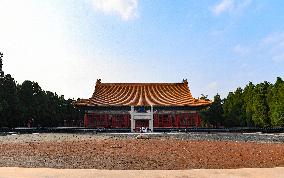
(240727) -- BEIJING, July 27, 2024 Photo by Xinhua/ABACAPRESS.COM) -- This photo taken on July 16, 2024 shows a view of the Altar of Land and Grain in Beijing, capital of China. The United Nations Educational, Scientific and Cultural Organization (UNESCO) on Saturday announced the inclusion of the Beijing Central Axis: A Building Ensemble Exhibiting the Ideal Order of the Chinese Capital, into its world heritage list. So far, China has a total of 59 World Heritage Sites. Beijing Central Axis, initially established in the 13th century and formed in the 16th century, runs through the old city of Beijing from north to south. It has become the longest urban axis in the world today, spanning 7.8 kilometers. The heritage area of the Beijing Central Axis covers 589 hectares, with a buffer zone of 4,542 hectares. Its location, layout, urban form, and design reflect the ancient Chinese tradition of urban planning, serving as an important emblem that highlights the distinctive characteristics of Chinese civilization. P

  •  
CHINA-BEIJING-CENTRAL AXIS-LISTED UNESCO WORLD HERITAGE (CN)

CHINA-BEIJING-CENTRAL AXIS-LISTED UNESCO WORLD HERITAGE (CN)

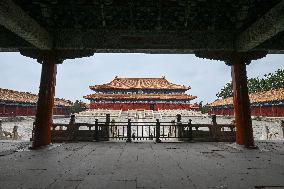
(240727) -- BEIJING, July 27, 2024 Photo by Xinhua/ABACAPRESS.COM) -- This photo taken on July 16, 2024 shows an interior view of the front hall of the Imperial Ancestral Temple in Beijing, capital of China. The United Nations Educational, Scientific and Cultural Organization (UNESCO) on Saturday announced the inclusion of the Beijing Central Axis: A Building Ensemble Exhibiting the Ideal Order of the Chinese Capital, into its world heritage list. So far, China has a total of 59 World Heritage Sites. Beijing Central Axis, initially established in the 13th century and formed in the 16th century, runs through the old city of Beijing from north to south. It has become the longest urban axis in the world today, spanning 7.8 kilometers. The heritage area of the Beijing Central Axis covers 589 hectares, with a buffer zone of 4,542 hectares. Its location, layout, urban form, and design reflect the ancient Chinese tradition of urban planning, serving as an important emblem that highlights the distinctive characterist

  •  
CHINA-BEIJING-CENTRAL AXIS-LISTED UNESCO WORLD HERITAGE (CN)

CHINA-BEIJING-CENTRAL AXIS-LISTED UNESCO WORLD HERITAGE (CN)

(240727) -- BEIJING, July 27, 2024 Photo by Xinhua/ABACAPRESS.COM) -- This photo taken on May 31, 2024 shows the Chairman Mao Memorial Hall, Zhengyangmen Gate and Zhengyangmen arrow tower (L to R) in Beijing, capital of China. The United Nations Educational, Scientific and Cultural Organization (UNESCO) on Saturday announced the inclusion of the Beijing Central Axis: A Building Ensemble Exhibiting the Ideal Order of the Chinese Capital, into its world heritage list. So far, China has a total of 59 World Heritage Sites. Beijing Central Axis, initially established in the 13th century and formed in the 16th century, runs through the old city of Beijing from north to south. It has become the longest urban axis in the world today, spanning 7.8 kilometers. The heritage area of the Beijing Central Axis covers 589 hectares, with a buffer zone of 4,542 hectares. Its location, layout, urban form, and design reflect the ancient Chinese tradition of urban planning, serving as an important emblem that highlights the disti

  •  
CHINA-BEIJING-CENTRAL AXIS-LISTED UNESCO WORLD HERITAGE (CN)

CHINA-BEIJING-CENTRAL AXIS-LISTED UNESCO WORLD HERITAGE (CN)

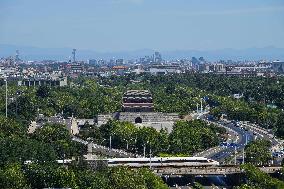
(240727) -- BEIJING, July 27, 2024 Photo by Xinhua/ABACAPRESS.COM) -- A bullet train runs past Yongdingmen Gate in Beijing, capital of China, July 18, 2024. The United Nations Educational, Scientific and Cultural Organization (UNESCO) on Saturday announced the inclusion of the Beijing Central Axis: A Building Ensemble Exhibiting the Ideal Order of the Chinese Capital, into its world heritage list. So far, China has a total of 59 World Heritage Sites. Beijing Central Axis, initially established in the 13th century and formed in the 16th century, runs through the old city of Beijing from north to south. It has become the longest urban axis in the world today, spanning 7.8 kilometers. The heritage area of the Beijing Central Axis covers 589 hectares, with a buffer zone of 4,542 hectares. Its location, layout, urban form, and design reflect the ancient Chinese tradition of urban planning, serving as an important emblem that highlights the distinctive characteristics of Chinese civilization. Photo by Xinhua/ABACAP

  •  
CHINA-BEIJING-CENTRAL AXIS-LISTED UNESCO WORLD HERITAGE (CN)

CHINA-BEIJING-CENTRAL AXIS-LISTED UNESCO WORLD HERITAGE (CN)

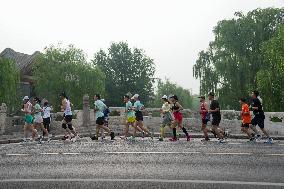
(240727) -- BEIJING, July 27, 2024 Photo by Xinhua/ABACAPRESS.COM) -- Joggers run on the Wanning Bridge in Beijing, capital of China, June 22, 2024. The United Nations Educational, Scientific and Cultural Organization (UNESCO) on Saturday announced the inclusion of the Beijing Central Axis: A Building Ensemble Exhibiting the Ideal Order of the Chinese Capital, into its world heritage list. So far, China has a total of 59 World Heritage Sites. Beijing Central Axis, initially established in the 13th century and formed in the 16th century, runs through the old city of Beijing from north to south. It has become the longest urban axis in the world today, spanning 7.8 kilometers. The heritage area of the Beijing Central Axis covers 589 hectares, with a buffer zone of 4,542 hectares. Its location, layout, urban form, and design reflect the ancient Chinese tradition of urban planning, serving as an important emblem that highlights the distinctive characteristics of Chinese civilization. Photo by Xinhua/ABACAPRESS.COM

  •  
CHINA-BEIJING-CENTRAL AXIS-LISTED UNESCO WORLD HERITAGE (CN)

CHINA-BEIJING-CENTRAL AXIS-LISTED UNESCO WORLD HERITAGE (CN)

(240727) -- BEIJING, July 27, 2024 Photo by Xinhua/ABACAPRESS.COM) -- This photo taken on July 17, 2024 shows a view of the Taisui hall of the Altar of the God of Agriculture in Beijing, capital of China. The United Nations Educational, Scientific and Cultural Organization (UNESCO) on Saturday announced the inclusion of the Beijing Central Axis: A Building Ensemble Exhibiting the Ideal Order of the Chinese Capital, into its world heritage list. So far, China has a total of 59 World Heritage Sites. Beijing Central Axis, initially established in the 13th century and formed in the 16th century, runs through the old city of Beijing from north to south. It has become the longest urban axis in the world today, spanning 7.8 kilometers. The heritage area of the Beijing Central Axis covers 589 hectares, with a buffer zone of 4,542 hectares. Its location, layout, urban form, and design reflect the ancient Chinese tradition of urban planning, serving as an important emblem that highlights the distinctive characteristics

  •  
CHINA-BEIJING-CENTRAL AXIS-LISTED UNESCO WORLD HERITAGE (CN)

CHINA-BEIJING-CENTRAL AXIS-LISTED UNESCO WORLD HERITAGE (CN)

(240727) -- BEIJING, July 27, 2024 Photo by Xinhua/ABACAPRESS.COM) -- This photo taken from the Drum Tower shows a view of the Beijing Central Axis in Beijing, capital of China, June 2, 2024. The United Nations Educational, Scientific and Cultural Organization (UNESCO) on Saturday announced the inclusion of the Beijing Central Axis: A Building Ensemble Exhibiting the Ideal Order of the Chinese Capital, into its world heritage list. So far, China has a total of 59 World Heritage Sites. Beijing Central Axis, initially established in the 13th century and formed in the 16th century, runs through the old city of Beijing from north to south. It has become the longest urban axis in the world today, spanning 7.8 kilometers. The heritage area of the Beijing Central Axis covers 589 hectares, with a buffer zone of 4,542 hectares. Its location, layout, urban form, and design reflect the ancient Chinese tradition of urban planning, serving as an important emblem that highlights the distinctive characteristics of Chinese c

  •  
CHINA-BEIJING-CENTRAL AXIS-LISTED UNESCO WORLD HERITAGE (CN)

CHINA-BEIJING-CENTRAL AXIS-LISTED UNESCO WORLD HERITAGE (CN)

(240727) -- BEIJING, July 27, 2024 Photo by Xinhua/ABACAPRESS.COM) -- Tourists visit Yongdingmen Park in Beijing, capital of China, July 18, 2024. The United Nations Educational, Scientific and Cultural Organization (UNESCO) on Saturday announced the inclusion of the Beijing Central Axis: A Building Ensemble Exhibiting the Ideal Order of the Chinese Capital, into its world heritage list. So far, China has a total of 59 World Heritage Sites. Beijing Central Axis, initially established in the 13th century and formed in the 16th century, runs through the old city of Beijing from north to south. It has become the longest urban axis in the world today, spanning 7.8 kilometers. The heritage area of the Beijing Central Axis covers 589 hectares, with a buffer zone of 4,542 hectares. Its location, layout, urban form, and design reflect the ancient Chinese tradition of urban planning, serving as an important emblem that highlights the distinctive characteristics of Chinese civilization. Photo by Xinhua/ABACAPRESS.COM/J

  •  
CHINA-BEIJING-CENTRAL AXIS-LISTED UNESCO WORLD HERITAGE (CN)

CHINA-BEIJING-CENTRAL AXIS-LISTED UNESCO WORLD HERITAGE (CN)

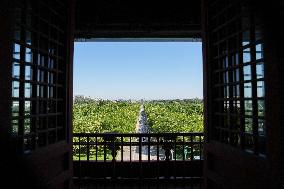
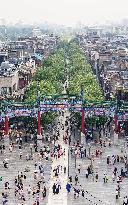
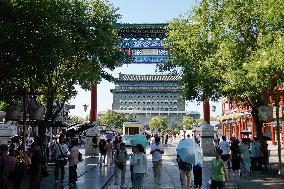
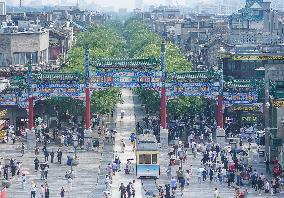
(240727) -- BEIJING, July 27, 2024 Photo by Xinhua/ABACAPRESS.COM) -- This photo taken on July 21, 2024 shows Qianmen Street and Yongdingmen Gate in the distance seen from the Zhengyangmen Gate arrow tower in Beijing, capital of China. The United Nations Educational, Scientific and Cultural Organization (UNESCO) on Saturday announced the inclusion of the Beijing Central Axis: A Building Ensemble Exhibiting the Ideal Order of the Chinese Capital, into its world heritage list. So far, China has a total of 59 World Heritage Sites. Beijing Central Axis, initially established in the 13th century and formed in the 16th century, runs through the old city of Beijing from north to south. It has become the longest urban axis in the world today, spanning 7.8 kilometers. The heritage area of the Beijing Central Axis covers 589 hectares, with a buffer zone of 4,542 hectares. Its location, layout, urban form, and design reflect the ancient Chinese tradition of urban planning, serving as an important emblem that highlights

  •  
CHINA-BEIJING-CENTRAL AXIS-LISTED UNESCO WORLD HERITAGE (CN)

CHINA-BEIJING-CENTRAL AXIS-LISTED UNESCO WORLD HERITAGE (CN)

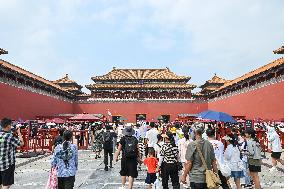
(240727) -- BEIJING, July 27, 2024 Photo by Xinhua/ABACAPRESS.COM) -- Tourists are seen at the Wumen Gate of the Forbidden City in Beijing, capital of China, July 16, 2024. The United Nations Educational, Scientific and Cultural Organization (UNESCO) on Saturday announced the inclusion of the Beijing Central Axis: A Building Ensemble Exhibiting the Ideal Order of the Chinese Capital, into its world heritage list. So far, China has a total of 59 World Heritage Sites. Beijing Central Axis, initially established in the 13th century and formed in the 16th century, runs through the old city of Beijing from north to south. It has become the longest urban axis in the world today, spanning 7.8 kilometers. The heritage area of the Beijing Central Axis covers 589 hectares, with a buffer zone of 4,542 hectares. Its location, layout, urban form, and design reflect the ancient Chinese tradition of urban planning, serving as an important emblem that highlights the distinctive characteristics of Chinese civilization. Photo

  •  
CHINA-BEIJING-CENTRAL AXIS-LISTED UNESCO WORLD HERITAGE (CN)

CHINA-BEIJING-CENTRAL AXIS-LISTED UNESCO WORLD HERITAGE (CN)

(240727) -- BEIJING, July 27, 2024 Photo by Xinhua/ABACAPRESS.COM) -- This photo taken on July 16, 2024 shows a view of the Altar of Land and Grain in Beijing, capital of China. The United Nations Educational, Scientific and Cultural Organization (UNESCO) on Saturday announced the inclusion of the Beijing Central Axis: A Building Ensemble Exhibiting the Ideal Order of the Chinese Capital, into its world heritage list. So far, China has a total of 59 World Heritage Sites. Beijing Central Axis, initially established in the 13th century and formed in the 16th century, runs through the old city of Beijing from north to south. It has become the longest urban axis in the world today, spanning 7.8 kilometers. The heritage area of the Beijing Central Axis covers 589 hectares, with a buffer zone of 4,542 hectares. Its location, layout, urban form, and design reflect the ancient Chinese tradition of urban planning, serving as an important emblem that highlights the distinctive characteristics of Chinese civilization. P

  •  
CHINA-BEIJING-CENTRAL AXIS-LISTED UNESCO WORLD HERITAGE (CN)

CHINA-BEIJING-CENTRAL AXIS-LISTED UNESCO WORLD HERITAGE (CN)

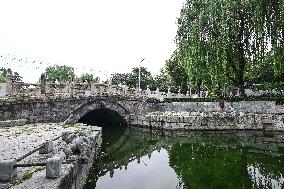
(240727) -- BEIJING, July 27, 2024 Photo by Xinhua/ABACAPRESS.COM) -- This photo taken on July 16, 2024 shows a view of the Wanning Bridge in Beijing, capital of China. The United Nations Educational, Scientific and Cultural Organization (UNESCO) on Saturday announced the inclusion of the Beijing Central Axis: A Building Ensemble Exhibiting the Ideal Order of the Chinese Capital, into its world heritage list. So far, China has a total of 59 World Heritage Sites. Beijing Central Axis, initially established in the 13th century and formed in the 16th century, runs through the old city of Beijing from north to south. It has become the longest urban axis in the world today, spanning 7.8 kilometers. The heritage area of the Beijing Central Axis covers 589 hectares, with a buffer zone of 4,542 hectares. Its location, layout, urban form, and design reflect the ancient Chinese tradition of urban planning, serving as an important emblem that highlights the distinctive characteristics of Chinese civilization. Photo by X

  •  
CHINA-BEIJING-CENTRAL AXIS-LISTED UNESCO WORLD HERITAGE (CN)

CHINA-BEIJING-CENTRAL AXIS-LISTED UNESCO WORLD HERITAGE (CN)

(240727) -- BEIJING, July 27, 2024 Photo by Xinhua/ABACAPRESS.COM) -- Tourists visit Taisui hall of the Altar of the God of Agriculture in Beijing, capital of China, July 17, 2024. The United Nations Educational, Scientific and Cultural Organization (UNESCO) on Saturday announced the inclusion of the Beijing Central Axis: A Building Ensemble Exhibiting the Ideal Order of the Chinese Capital, into its world heritage list. So far, China has a total of 59 World Heritage Sites. Beijing Central Axis, initially established in the 13th century and formed in the 16th century, runs through the old city of Beijing from north to south. It has become the longest urban axis in the world today, spanning 7.8 kilometers. The heritage area of the Beijing Central Axis covers 589 hectares, with a buffer zone of 4,542 hectares. Its location, layout, urban form, and design reflect the ancient Chinese tradition of urban planning, serving as an important emblem that highlights the distinctive characteristics of Chinese civilization

  •  
CHINA-BEIJING-CENTRAL AXIS-LISTED UNESCO WORLD HERITAGE (CN)

CHINA-BEIJING-CENTRAL AXIS-LISTED UNESCO WORLD HERITAGE (CN)

(240727) -- BEIJING, July 27, 2024 Photo by Xinhua/ABACAPRESS.COM) -- A girl is pictured near an urban sculpture at Qianmen Street in Beijing, capital of China, July 17, 2024. The United Nations Educational, Scientific and Cultural Organization (UNESCO) on Saturday announced the inclusion of the Beijing Central Axis: A Building Ensemble Exhibiting the Ideal Order of the Chinese Capital, into its world heritage list. So far, China has a total of 59 World Heritage Sites. Beijing Central Axis, initially established in the 13th century and formed in the 16th century, runs through the old city of Beijing from north to south. It has become the longest urban axis in the world today, spanning 7.8 kilometers. The heritage area of the Beijing Central Axis covers 589 hectares, with a buffer zone of 4,542 hectares. Its location, layout, urban form, and design reflect the ancient Chinese tradition of urban planning, serving as an important emblem that highlights the distinctive characteristics of Chinese civilization. Pho

  •  
CHINA-BEIJING-CENTRAL AXIS-LISTED UNESCO WORLD HERITAGE (CN)

CHINA-BEIJING-CENTRAL AXIS-LISTED UNESCO WORLD HERITAGE (CN)

(240727) -- BEIJING, July 27, 2024 Photo by Xinhua/ABACAPRESS.COM) -- This photo taken on July 16, 2024 shows a view of the Wanning Bridge in Beijing, capital of China. The United Nations Educational, Scientific and Cultural Organization (UNESCO) on Saturday announced the inclusion of the Beijing Central Axis: A Building Ensemble Exhibiting the Ideal Order of the Chinese Capital, into its world heritage list. So far, China has a total of 59 World Heritage Sites. Beijing Central Axis, initially established in the 13th century and formed in the 16th century, runs through the old city of Beijing from north to south. It has become the longest urban axis in the world today, spanning 7.8 kilometers. The heritage area of the Beijing Central Axis covers 589 hectares, with a buffer zone of 4,542 hectares. Its location, layout, urban form, and design reflect the ancient Chinese tradition of urban planning, serving as an important emblem that highlights the distinctive characteristics of Chinese civilization. Photo by X

  •  
CHINA-BEIJING-CENTRAL AXIS-LISTED UNESCO WORLD HERITAGE (CN)

CHINA-BEIJING-CENTRAL AXIS-LISTED UNESCO WORLD HERITAGE (CN)

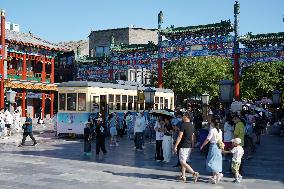
(240727) -- BEIJING, July 27, 2024 Photo by Xinhua/ABACAPRESS.COM) -- Tourists visit Qianmen Street in Beijing, capital of China, July 17, 2024. The United Nations Educational, Scientific and Cultural Organization (UNESCO) on Saturday announced the inclusion of the Beijing Central Axis: A Building Ensemble Exhibiting the Ideal Order of the Chinese Capital, into its world heritage list. So far, China has a total of 59 World Heritage Sites. Beijing Central Axis, initially established in the 13th century and formed in the 16th century, runs through the old city of Beijing from north to south. It has become the longest urban axis in the world today, spanning 7.8 kilometers. The heritage area of the Beijing Central Axis covers 589 hectares, with a buffer zone of 4,542 hectares. Its location, layout, urban form, and design reflect the ancient Chinese tradition of urban planning, serving as an important emblem that highlights the distinctive characteristics of Chinese civilization. Photo by Xinhua/ABACAPRESS.COM/Zha

  •  
CHINA-BEIJING-CENTRAL AXIS-LISTED UNESCO WORLD HERITAGE (CN)

CHINA-BEIJING-CENTRAL AXIS-LISTED UNESCO WORLD HERITAGE (CN)

(240727) -- BEIJING, July 27, 2024 Photo by Xinhua/ABACAPRESS.COM) -- This photo taken on July 17, 2024 shows a view of the worship hall of the Altar of the God of Agriculture in Beijing, capital of China. The United Nations Educational, Scientific and Cultural Organization (UNESCO) on Saturday announced the inclusion of the Beijing Central Axis: A Building Ensemble Exhibiting the Ideal Order of the Chinese Capital, into its world heritage list. So far, China has a total of 59 World Heritage Sites. Beijing Central Axis, initially established in the 13th century and formed in the 16th century, runs through the old city of Beijing from north to south. It has become the longest urban axis in the world today, spanning 7.8 kilometers. The heritage area of the Beijing Central Axis covers 589 hectares, with a buffer zone of 4,542 hectares. Its location, layout, urban form, and design reflect the ancient Chinese tradition of urban planning, serving as an important emblem that highlights the distinctive characteristic

  •  
CHINA-BEIJING-CENTRAL AXIS-LISTED UNESCO WORLD HERITAGE (CN)

CHINA-BEIJING-CENTRAL AXIS-LISTED UNESCO WORLD HERITAGE (CN)

(240727) -- BEIJING, July 27, 2024 Photo by Xinhua/ABACAPRESS.COM) -- Tourists visit Qianmen Street in Beijing, capital of China, July 17, 2024. The United Nations Educational, Scientific and Cultural Organization (UNESCO) on Saturday announced the inclusion of the Beijing Central Axis: A Building Ensemble Exhibiting the Ideal Order of the Chinese Capital, into its world heritage list. So far, China has a total of 59 World Heritage Sites. Beijing Central Axis, initially established in the 13th century and formed in the 16th century, runs through the old city of Beijing from north to south. It has become the longest urban axis in the world today, spanning 7.8 kilometers. The heritage area of the Beijing Central Axis covers 589 hectares, with a buffer zone of 4,542 hectares. Its location, layout, urban form, and design reflect the ancient Chinese tradition of urban planning, serving as an important emblem that highlights the distinctive characteristics of Chinese civilization. Photo by Xinhua/ABACAPRESS.COM/Zha

  •  
CHINA-BEIJING-CENTRAL AXIS-LISTED UNESCO WORLD HERITAGE (CN)

CHINA-BEIJING-CENTRAL AXIS-LISTED UNESCO WORLD HERITAGE (CN)

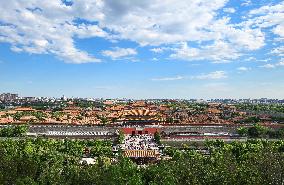
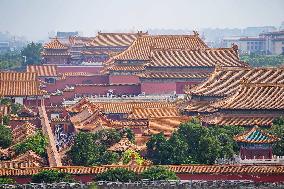
(240727) -- BEIJING, July 27, 2024 Photo by Xinhua/ABACAPRESS.COM) -- This photo taken on July 16, 2024 shows a view of the Forbidden City seen from the Jingshan Park in Beijing, capital of China. The United Nations Educational, Scientific and Cultural Organization (UNESCO) on Saturday announced the inclusion of the Beijing Central Axis: A Building Ensemble Exhibiting the Ideal Order of the Chinese Capital, into its world heritage list. So far, China has a total of 59 World Heritage Sites. Beijing Central Axis, initially established in the 13th century and formed in the 16th century, runs through the old city of Beijing from north to south. It has become the longest urban axis in the world today, spanning 7.8 kilometers. The heritage area of the Beijing Central Axis covers 589 hectares, with a buffer zone of 4,542 hectares. Its location, layout, urban form, and design reflect the ancient Chinese tradition of urban planning, serving as an important emblem that highlights the distinctive characteristics of Chin

  •  
CHINA-BEIJING-CENTRAL AXIS-UNESCO WORLD HERITAGE-RUNNING ENTHUSIASTS (CN)

CHINA-BEIJING-CENTRAL AXIS-UNESCO WORLD HERITAGE-RUNNING ENTHUSIASTS (CN)

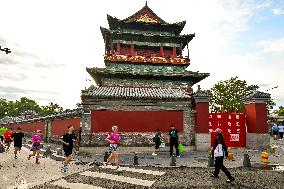
(240727) -- BEIJING, July 27, 2024 Photo by Xinhua/ABACAPRESS.COM) -- Running enthusiasts run past the Drum Tower in Beijing, capital of China, July 20, 2024. The Beijing Central Axis is a running route full of cultural vibe in the eyes of running enthusiasts. The United Nations Educational, Scientific and Cultural Organization (UNESCO) on Saturday announced the inclusion of the Beijing Central Axis: A Building Ensemble Exhibiting the Ideal Order of the Chinese Capital, into its world heritage list. Beijing Central Axis, initially established in the 13th century and formed in the 16th century, runs through the old city of Beijing from north to south. It has become the longest urban axis in the world today, spanning 7.8 kilometers. The heritage area of the Beijing Central Axis covers 589 hectares, with a buffer zone of 4,542 hectares. Its location, layout, urban form, and design reflect the ancient Chinese tradition of urban planning, serving as an important emblem that highlights the distinctive characteristi

  •  
CHINA-BEIJING-CENTRAL AXIS-LISTED UNESCO WORLD HERITAGE (CN)

CHINA-BEIJING-CENTRAL AXIS-LISTED UNESCO WORLD HERITAGE (CN)

(240727) -- BEIJING, July 27, 2024 Photo by Xinhua/ABACAPRESS.COM) -- This photo taken on July 16, 2024 shows a view of the Imperial Ancestral Temple in Beijing, capital of China. The United Nations Educational, Scientific and Cultural Organization (UNESCO) on Saturday announced the inclusion of the Beijing Central Axis: A Building Ensemble Exhibiting the Ideal Order of the Chinese Capital, into its world heritage list. So far, China has a total of 59 World Heritage Sites. Beijing Central Axis, initially established in the 13th century and formed in the 16th century, runs through the old city of Beijing from north to south. It has become the longest urban axis in the world today, spanning 7.8 kilometers. The heritage area of the Beijing Central Axis covers 589 hectares, with a buffer zone of 4,542 hectares. Its location, layout, urban form, and design reflect the ancient Chinese tradition of urban planning, serving as an important emblem that highlights the distinctive characteristics of Chinese civilization.

  •  
CHINA-BEIJING-CENTRAL AXIS-UNESCO WORLD HERITAGE-RUNNING ENTHUSIASTS (CN)

CHINA-BEIJING-CENTRAL AXIS-UNESCO WORLD HERITAGE-RUNNING ENTHUSIASTS (CN)

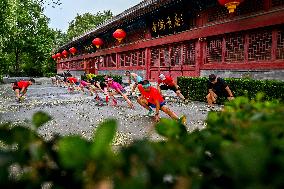
(240727) -- BEIJING, July 27, 2024 Photo by Xinhua/ABACAPRESS.COM) -- Running enthusiasts warm up in front of a bookstore at Di'anmen Gate in Beijing, capital of China, July 20, 2024. The Beijing Central Axis is a running route full of cultural vibe in the eyes of running enthusiasts. The United Nations Educational, Scientific and Cultural Organization (UNESCO) on Saturday announced the inclusion of the Beijing Central Axis: A Building Ensemble Exhibiting the Ideal Order of the Chinese Capital, into its world heritage list. Beijing Central Axis, initially established in the 13th century and formed in the 16th century, runs through the old city of Beijing from north to south. It has become the longest urban axis in the world today, spanning 7.8 kilometers. The heritage area of the Beijing Central Axis covers 589 hectares, with a buffer zone of 4,542 hectares. Its location, layout, urban form, and design reflect the ancient Chinese tradition of urban planning, serving as an important emblem that highlights the

  •  
CHINA-BEIJING-CENTRAL AXIS-LISTED UNESCO WORLD HERITAGE (CN)

CHINA-BEIJING-CENTRAL AXIS-LISTED UNESCO WORLD HERITAGE (CN)

(240727) -- BEIJING, July 27, 2024 Photo by Xinhua/ABACAPRESS.COM) -- This photo taken on July 21, 2024 shows Qianmen Street and Yongdingmen Gate in the distance seen from the Zhengyangmen Gate arrow tower in Beijing, capital of China. The United Nations Educational, Scientific and Cultural Organization (UNESCO) on Saturday announced the inclusion of the Beijing Central Axis: A Building Ensemble Exhibiting the Ideal Order of the Chinese Capital, into its world heritage list. So far, China has a total of 59 World Heritage Sites. Beijing Central Axis, initially established in the 13th century and formed in the 16th century, runs through the old city of Beijing from north to south. It has become the longest urban axis in the world today, spanning 7.8 kilometers. The heritage area of the Beijing Central Axis covers 589 hectares, with a buffer zone of 4,542 hectares. Its location, layout, urban form, and design reflect the ancient Chinese tradition of urban planning, serving as an important emblem that highlights

  •  
CHINA-BEIJING-CENTRAL AXIS-UNESCO WORLD HERITAGE-RUNNING ENTHUSIASTS (CN)

CHINA-BEIJING-CENTRAL AXIS-UNESCO WORLD HERITAGE-RUNNING ENTHUSIASTS (CN)

(240727) -- BEIJING, July 27, 2024 Photo by Xinhua/ABACAPRESS.COM) -- Running enthusiast Liu Jixiang shows her running trace along the Beijing Central Axis in Beijing, capital of China, July 20, 2024. The Beijing Central Axis is a running route full of cultural vibe in the eyes of running enthusiasts. The United Nations Educational, Scientific and Cultural Organization (UNESCO) on Saturday announced the inclusion of the Beijing Central Axis: A Building Ensemble Exhibiting the Ideal Order of the Chinese Capital, into its world heritage list. Beijing Central Axis, initially established in the 13th century and formed in the 16th century, runs through the old city of Beijing from north to south. It has become the longest urban axis in the world today, spanning 7.8 kilometers. The heritage area of the Beijing Central Axis covers 589 hectares, with a buffer zone of 4,542 hectares. Its location, layout, urban form, and design reflect the ancient Chinese tradition of urban planning, serving as an important emblem tha

  •  
CHINA-BEIJING-CENTRAL AXIS-UNESCO WORLD HERITAGE-RUNNING ENTHUSIASTS (CN)

CHINA-BEIJING-CENTRAL AXIS-UNESCO WORLD HERITAGE-RUNNING ENTHUSIASTS (CN)

(240727) -- BEIJING, July 27, 2024 Photo by Xinhua/ABACAPRESS.COM) -- Running enthusiasts pose for a group photo in front of a turret of the Forbidden City in Beijing, capital of China, July 20, 2024. The Beijing Central Axis is a running route full of cultural vibe in the eyes of running enthusiasts. The United Nations Educational, Scientific and Cultural Organization (UNESCO) on Saturday announced the inclusion of the Beijing Central Axis: A Building Ensemble Exhibiting the Ideal Order of the Chinese Capital, into its world heritage list. Beijing Central Axis, initially established in the 13th century and formed in the 16th century, runs through the old city of Beijing from north to south. It has become the longest urban axis in the world today, spanning 7.8 kilometers. The heritage area of the Beijing Central Axis covers 589 hectares, with a buffer zone of 4,542 hectares. Its location, layout, urban form, and design reflect the ancient Chinese tradition of urban planning, serving as an important emblem tha

  • Main
  • Top
  • Editorial
  • Creative
  • About Us
  • About ILG
  • Terms of use
  • Company
  • BEHIND
  • Price List
  • Single Plan
  • Monthly Plan
  • Services
  • Shooting
  • Rights Clearance
  • Support
  • FAQ
  • How To Buy
  • Contact Us
  • Become a Partner

© KYODO NEWS IMAGES INC

All Rights Reserved.

  • Editorial
  • Olympics
  • News
  • Sports
  • Japan
  • Tech
  • Royal
  • Disaster
  • NorthKorea
  • Old Japan
  • SNS
  • Creative
  • Food
  • Japan
  • Landscape
  • Animal
  • Popular
  • #Ukraine
  • #China
  • #coronavirus
  • #N. Korea
  • #Russia
  • #Thailand
  • #Ukraine
  • #China
  • #coronavirus
  • #N. Korea
  • #Russia
  • #Thailand
  • Food
  • Japan
  • Landscape
  • Animal
  • Olympics
  • News
  • Sports
  • Japan
  • Tech
  • Royal
  • Disaster
  • NorthKorea
  • Old Japan
  • SNS